

Showing posts with label Tech Solutions. Show all posts
Showing posts with label Tech Solutions. Show all posts
" This operation has been canceled due to restrictions in effect " Error Fix

If you are getting an error window that says “This operation has been canceled due to restrictions in effect. Please contact your system administrator.” when you click on a hyperlink in Outlook or another program and now you’re wondering who put a restriction on your computer and when, don’t worry. This error occurs typically after a faulty uninstallation of a third-party web browser such as Google Chrome, when the uninstall breaks the connection between your hyperlinks and your default web browser, and now your computer is trying to open those hyperlinks with a program that’s no longer installed on your computer. The fix for this is pretty simple, so read on for the how to instructions…
How to fix the “This operation has been canceled due to restrictions in effect” error…
“This operation has been canceled due to restrictions in effect on this computer.” Error message
If you’re seeing an error message like the one above when you click on a hyperlink, the culprit 99.9% of the time is a faulty uninstallation of a third-party web browser. Although the third-party web browser may have uninstalled properly from your computer, your computer now doesn’t know to look for a different web browser when trying to open a hyperlink.
In order to resolve this issue, you have a few options. Your first plan of attack, and also the simplest, would be to open your Internet Explorer (or whichever web browser you wish to use as your default) and reset the default settings. To do this in Internet Explorer:
Select Tools from the menu bar
Select ‘Internet Options’
Select the ‘Advanced’ tab
Click ‘Reset’ under the ‘Reset Internet Explorer Settings’ field
Once you’ve reset the settings in Internet Explorer, close the program, restart your computer, and try clicking a hyperlink that gave you the error message before. If you are still getting the “This operation has been canceled due to restrictions in effect. Please contact your system administrator.” error message, then you’ll have to try a different method for resolving the error.
If you are using a Windows computer, Microsoft has created a “Fix It For Me” utility which you can install on your computer, and it will automate the repair process for you. The link for this utility can be found in Microsoft’s knowledge base article on this topic.
For those of you who wish to not use this Microsoft utility, or if you’re experiencing a similar issue on Mac – your best bet for resolving this issue without having to edit critical system files, is simply to re-download and install the web browser you previously uninstalled, then be sure to set your prefered web browser as the default web browser. Once you’ve made the association between any hyperlinks and your preferred web browser, you can again uninstall the web browser you do not want.
Hopefully that last section made sense to you, as the process is much simpler than trying to explain it. If you found that to be confusing at all, please either leave a comment here, or send me an email and I’ll be happy to work with you further on this!
Top 5 Money Machines

Google AdSense is a program run by Google Inc. that allows publishers in the Google Network of content sites to serve automatic text, image, video, and rich media adverts that are targeted to site content and audience.

Google AdSense is a program run by Google Inc. that allows publishers in the Google Network of content sites to serve automatic text, image, video, and rich media adverts that are targeted to site content and audience. These adverts are administered, sorted, and maintained by Google, and they can generate revenue on either a per-click or per-impression basis. Google beta-tested a cost-per-action service, but discontinued it in October 2008 in favor of a DoubleClick offering (also owned by Google).[2] In Q1 2011, Google earned US $2.43 billion ($9.71 billion annualized), or 28% of total revenue, through Google AdSense.[3]

An early reference is US Patent 6957224, which describes
...a system, method and computer program product for providing links to remotely located information in a network of remotely connected computers. A uniform resource locator (URL) is registered with a server. A shorthand link is associated with the registered URL. The associated shorthand link and URL are logged in a registry database. When a request is received for a shorthand link, the registry database is searched for an associated URL. If the shorthand link is found to be associated with an URL, the URL is fetched, otherwise an error message is returned.[6]
The patent was filed in September 2000; while the patent was issued in 2005, patent applications are made public within 18 months of filing.
Another reference to URL shortening was in 2001.[7] The first notable URL shortening service, TinyURL, was launched in 2002. Its popularity influenced the creation of at least 100 similar websites,[8] although most are simply domain alternatives. Initially Twitter automatically translated long URLs using TinyURL, although it began using bit.ly in 2009.[9]
In May 2009, the service .tk, which previously generated memorable domains via URL redirection, launched tweak.tk,[10] which generates very short URLs. On 14 August 2009, WordPress announced the wp.me URL shortener for use when referring to any WordPress.com blog post.[11] In November 2009, shortened links on bit.ly were accessed 2.1 billion times.[12] Around that time, bit.ly and TinyURL were the most widely used URL-shortening services.[12]
On 10 August 2009, however, tr.im, announced that it was curtailing the generation of new shortened URLs, but assured that existing tr.im short URLs would "continue to redirect, and will do so until at least December 31, 2009". A blog post on the site attributed this move to several factors, including a lack of suitable revenue-generating mechanisms to cover ongoing hosting and maintenance costs, a lack of interest among possible purchasers of the service and Twitter's default use of the bit.ly shortener.[13] This blog post also questioned whether other shortening services can successfully make money from URL shortening in the longer term. A few days later, tr.im appeared to alter its stance, announcing that it would resume all operations "going forward, indefinitely, while we continue to consider our options in regards to tr.im's future"[14] but, as of July 11, 2011, the tr.im service failed.
In December 2009, the URL shortener TO./ NanoURL was launched by .TO. This service creates a URL address which looks like http://to./xxxx, where xxxx represents a combination of random numbers and letters. NanoURL currently generates the shortest URLs of all URL shortening services, because it is hosted on a top-level domain (the one of Tonga). This rare form of URL may cause problems with some browsers, however, where the string is interpreted as a search term and passed to a search engine, instead of being opened.[15] As of 2011, the service is no longer available.
On 14 December 2009, Google announced a service called Google URL Shortener at goo.gl, which originally was only available for use through Google products (such as Google Toolbar and FeedBurner).[16] It does, however, have two extensions (Standard and Lite versions) for Google Chrome.[17] On 21 December 2009, Google also announced a service called YouTube URL Shortener, youtu.be,[18] and since September 2010, Google URL Shortener has become available via a direct interface, Google's direct link (goo.gl) will ask you to prove you're not a robot with CAPTCHA (May 2012).
...a system, method and computer program product for providing links to remotely located information in a network of remotely connected computers. A uniform resource locator (URL) is registered with a server. A shorthand link is associated with the registered URL. The associated shorthand link and URL are logged in a registry database. When a request is received for a shorthand link, the registry database is searched for an associated URL. If the shorthand link is found to be associated with an URL, the URL is fetched, otherwise an error message is returned.[6]
The patent was filed in September 2000; while the patent was issued in 2005, patent applications are made public within 18 months of filing.
Another reference to URL shortening was in 2001.[7] The first notable URL shortening service, TinyURL, was launched in 2002. Its popularity influenced the creation of at least 100 similar websites,[8] although most are simply domain alternatives. Initially Twitter automatically translated long URLs using TinyURL, although it began using bit.ly in 2009.[9]
In May 2009, the service .tk, which previously generated memorable domains via URL redirection, launched tweak.tk,[10] which generates very short URLs. On 14 August 2009, WordPress announced the wp.me URL shortener for use when referring to any WordPress.com blog post.[11] In November 2009, shortened links on bit.ly were accessed 2.1 billion times.[12] Around that time, bit.ly and TinyURL were the most widely used URL-shortening services.[12]
On 10 August 2009, however, tr.im, announced that it was curtailing the generation of new shortened URLs, but assured that existing tr.im short URLs would "continue to redirect, and will do so until at least December 31, 2009". A blog post on the site attributed this move to several factors, including a lack of suitable revenue-generating mechanisms to cover ongoing hosting and maintenance costs, a lack of interest among possible purchasers of the service and Twitter's default use of the bit.ly shortener.[13] This blog post also questioned whether other shortening services can successfully make money from URL shortening in the longer term. A few days later, tr.im appeared to alter its stance, announcing that it would resume all operations "going forward, indefinitely, while we continue to consider our options in regards to tr.im's future"[14] but, as of July 11, 2011, the tr.im service failed.
In December 2009, the URL shortener TO./ NanoURL was launched by .TO. This service creates a URL address which looks like http://to./xxxx, where xxxx represents a combination of random numbers and letters. NanoURL currently generates the shortest URLs of all URL shortening services, because it is hosted on a top-level domain (the one of Tonga). This rare form of URL may cause problems with some browsers, however, where the string is interpreted as a search term and passed to a search engine, instead of being opened.[15] As of 2011, the service is no longer available.
On 14 December 2009, Google announced a service called Google URL Shortener at goo.gl, which originally was only available for use through Google products (such as Google Toolbar and FeedBurner).[16] It does, however, have two extensions (Standard and Lite versions) for Google Chrome.[17] On 21 December 2009, Google also announced a service called YouTube URL Shortener, youtu.be,[18] and since September 2010, Google URL Shortener has become available via a direct interface, Google's direct link (goo.gl) will ask you to prove you're not a robot with CAPTCHA (May 2012).

Infolinks is an online advertising network which offers a range of products for publishers and bloggers.[3][4] According to Leadledger, about 0.60% of all website use company's services.[5]

Qadabra is a self-serve ad platform created explicitly for publishers looking to monetize their website traffic by earning revenue through performance-based advertising
Clicksor offers webmasters the opportunity to earn additional income by using a selection of clickable text or targeted contextual banners on their websites or blogs. We offer:
Timely payouts on a net 15 basis
A low minimum payout of $50 (via Check or Paypal)
Excellent client support by phone or live chat
A choice of 10+ ad formats
An amazing referral program with 10% commission
Timely payouts on a net 15 basis
A low minimum payout of $50 (via Check or Paypal)
Excellent client support by phone or live chat
A choice of 10+ ad formats
An amazing referral program with 10% commission
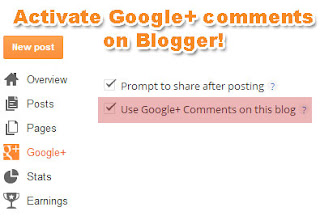
How to use Google+ comments on Blogger?
Google Accused Of Using Android OS As Trojan Horse

Microsoft, Nokia and a selection of other companies have filed a complaint with the European Commission over Google's "anti-competitive" mobile strategy.
The companies are all members of FairSearch, a group which campaigns against what it sees as instances of Google abusing its search monopoly. In this case, the "predatory" practice of offering its Android mobile operating system free of charge while requiring prominent default placement of Google's own apps.
How to Embed Just a Portion of a YouTube Video
 Do you want to embed the most interesting part of a YouTube video in your website and isolate the rest. Here are simple workarounds to help you embed portions of any Youtube video.Sometimes you may want to embed just a portion of a YouTube video in your web pages.
Stop Tracking Your Own Pageviews in Blogger?
 Blogger provides a built-in stats monitoring tool that provides you the most comprehensive information about your visitors. It keeps track of your visitors and provides in-depth details about the total number of pageviews, the operating system they are using, the traffic source and etc. Since, it also tracks your pageviews, so it gets difficult to identify how many visitors or page views your site is serving. So, if you are looking to Stop Tracking your own Page views in Blogger Stats then in this article, we will show you How to Stop Tracking your own Pageviews in Blogger?
How to Write a Famous Blog

Blogs, or web logs, are one of the fastest-growing means of mass communication. Though blogs originally gained mainstream attention in the 2000's through articles in prominent newspapers and magazines, several popular weblogs now rival traditional media outlets in terms of readership, and, arguably, cultural relevance. The "blogosphere" has affected elections and corporate policy, and some blogs have millions of readers a day. Moreover, they are fun to read, and writing them can be enjoyable, too.
4 Easy Tips to Improve Your Blogger Blog

Many of us have blogs that we update regularly to keep family and friends updated, to act as a portfolio for a business or for the lucky few ““ to provide an income from advertising. I keep mine mostly for fun and to showcase my writing.
10 Tips for Attracting People to your Blog

1. Get started
The first step to get started is by choosing a right blogging platform. There are many free design themes available and you can customize them according to your needs. If you are yet to learn using them, check many free vide tutorials online.
The first step to get started is by choosing a right blogging platform. There are many free design themes available and you can customize them according to your needs. If you are yet to learn using them, check many free vide tutorials online.
Perfect Place To Buy And Sell Photos - Deposit Photos

How To Resize All Images Automatically In Blogger

From time to time people send us emails asking a very common question, does there is any way to resize all the images of their blogger blog? Sometimes images of large magnitude flow out of the content this not only disappoint your readers, but also affect your online reputations. Blogger provides basic options for resizing images, but this not a practical approach and does not fit the blogs designs well. Fortunately, a straightforward CSS tweak makes it possible to automatically modify each and every image on your site. In this article, we will show you How to Resize All Images in Blogger?
Alexa Rank Checker

Alexa Traffic Rank is based on three months of aggregated historical traffic data from millions of Alexa Toolbar users and data obtained from other, diverse traffic data sources, and is a combined measure of page views and users (reach).
Bulk websites can be entered .
Samsung 13-Inch Series 9 Ultrabook Released
 Samsung has unveiled the latest version of its 13-inch Series 9 Premium Ultrabook, and this time the diminutive notebook is packing a slick 1080p display. The $1,399 Series 9 , which is available now through Samsung.com, weighs in at 2.5 pounds and measures 12.4 x 8.6 x 0.5 inches.
Banned AdSense Publisher Gets His Money Back from Google

It’s not uncommon to hear stories of disgruntled AdSense publishers whose accounts have been permanently banned by Google either due to "non-compliance with AdSense policies" or for "posing a significant risk to AdWords advertisers."
The compliance issue is almost always related to content. For instance, if any particular website is centered around banned topics (like gambling or pornography), Google can disable AdSense serving for that website.
The Revenue Share Of Google Adsense Publishers
While Google has never disclosed the exact percentage of revenue that it shares with AdSense publishers, once can easily derive that number using the earnings report that are released at the end of each quarter.

The Google Network Revenues section reflects the total revenue that was generated though AdSense while the Traffic Acquisition Costs section reflects the total amount that was paid by Google to AdSense publishers.
To know the approximate revenue share, simply divide TAC with the total AdSense revenue. Here’s a quick chart comparing these numbers for the year 2009. The percentage of revenue that Google is sharing with AdSense publishers has reduced from 75% in Q1 to 72% in Q4 2009.
| Q1 ’09 | Q2 ’09 | Q3 ’09 | Q4 ’09 | |
| What Google earned from AdSense (in billion) | $1.64 | $1.68 | $1.80 | $2.04 |
| What Google paid to AdSense publishers (in billion) | $1.23 | $1.24 | $1.33 | $1.47 |
| Percentage share of AdSense Publishers | 75.0% | 73.8% | 73.9% | 72.1% |
The AdSense Revenue Share
Update 1: At the DLD conference in Munch, Google told Jeff Jarvis that they “would consider giving more transparency about revenue splits in AdSense.”
Nikesh Arora [President of Sales, Google] said that the company was considering more transparency. I confirmed with Google’s people that this was new. I suspect that they’re not going to promise the possibility and not deliver something.
Update 2: Google has finally released the exact percentage of revenue that they share with AdSense publishers worldwide.
Google shares 68% advertising revenue with AdSense publishers (those who use regular AdSense text, image and rich-media ads) while the split is 51-49 for ads that show up in Google Custom Search results.
To give you an example, if the revenue from Google AdSense ads on your web site is $100, you (publisher) would receive receive $68 through AdSense while Google keeps the remaining $32. The standard revenue split in the agency model is 70-30.
Google AdSense is also available for the YouTube partner program but YouTube /Google hasn’t yet disclosed revenue share (or split) with video producers.
How To Get RSS Feeds For Twitter
Twitter is permanently retiring the Twitter API v1.0 sometime later this month and, to the end user, what it means is that all the existing Atom and RSS feeds of Twitter will stop working once the old API is turned off. With API v1.1, Twitter has completely switched from XML to JSON format and the other big change is that all requests to the Twitter API must now be authenticated with OAuth.
How To Embed A Youtube Video As Page Background

You are probably using a single static image as the background for your website but it may offer a slightly more richer experience if you could consider placing moving images, like an animation or a self-playing video clip, in the background of your web pages.
How To Accept Social Payments In Your Website

Web publishers and content creators are experimenting with a “cash-less” payment model where people can use social networks to pay for premium products like ebooks, songs, discount coupons, research reports, etc.
Prevent People From Stealing Your Wi-Fi Connection

The data LED of your wireless router is constantly blinking and none of the family members are using the Internet at home. This might indicate that someone outside – probably your neighbors – are surfing the web using your Wireless (Wi-Fi) network.
How To Upgrade To Windows 8

Here are the steps to upgrade your Windows XP , Windows Vista or Windows 7 To The Brand New Windows 8 Professional .
Windows 8 is finally here. I just upgraded my Windows 7 desktop to Windows 8 and the process couldn’t be smoother.


